I have bolted a lot of things to a lot of surfaces. Desks, wall studs, truck beds, handlebars. Thirteen years in IT infrastructure and a side business that has assembled more than 200 home offices taught me that monitor arm and mount hardware fails in exactly two ways: it moves when it should not, or it will not move when you want it to. Everything else, the finish, the packaging, the brand story, is decoration.
This comparison is not a four way fight. These four products do not compete with each other. What they share is a job description: hold something heavy, at an angle, under load, without loosening. A pole mounted monitor arm holds a screen at eye level. A truck bed rack holds a bike upright at highway speed. A hitch rack holds four bikes behind a moving vehicle. A disc brake caliper holds a pad against a spinning rotor. If you are building a desk and a garage in the same season, this is your hardware list.
Related: Monitor Arm Clamp Vs Grommet Mount: Measure Your Desk First
The mount I would put on my own desk first is the VIVO pole mounted arm, because a pole sidesteps the most common failure point in monitor arms: the desk edge. A clamp is only as good as the lip it grabs. A pole does not care how thick your desk is, whether the edge is beveled, or whether there is a steel crossmember and a weld bead exactly where the clamp needs to sit.
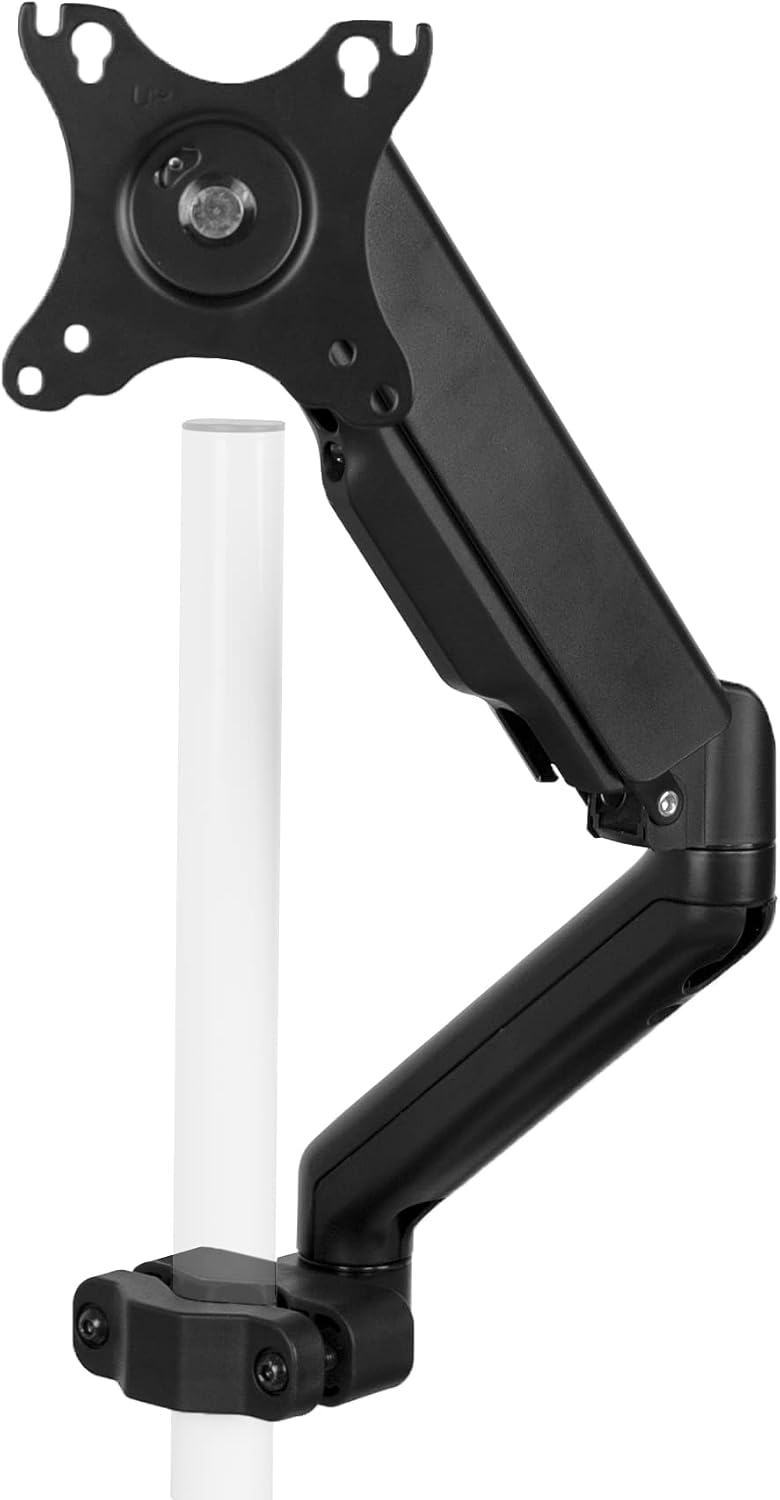
VIVO Black Pole Mounted Monitor Arm, 17-32 in Screens, MOUNT-POLE05O
Pole mount ignores desk thickness entirely, and one arm covers 17 to 32 inch screens
Needs a pole and a base footprint on the desk, and cables have to follow the column
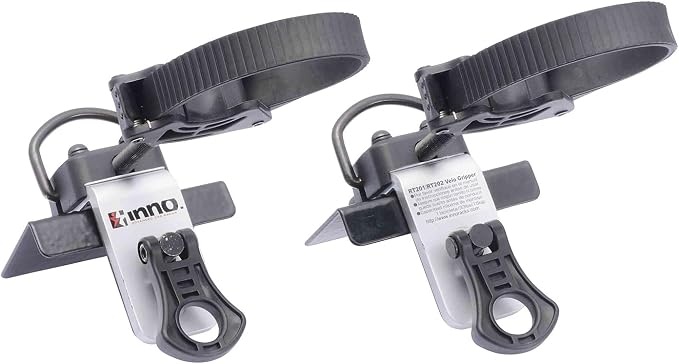
INNO RT202 Truck Bed Bike Rack - Bike Mount for Pickup Truck with C-Channel Track Systems
Uses a track that is already bolted to the truck bed, so no paint contact and no strap tension
Useless on a truck without a C-channel track, and it competes with covers and rails for that track
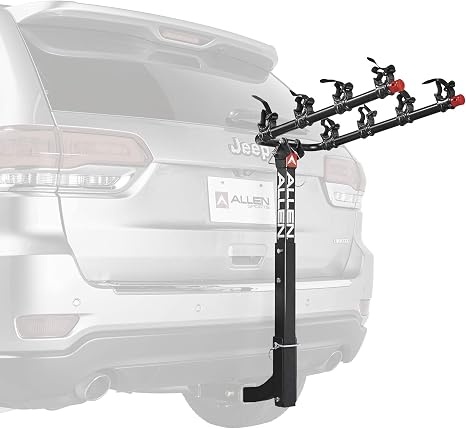
Allen Sports Deluxe 4-Bike Hitch Mount Rack (2-Inch Receiver) , Black
Fits a 2 inch receiver, moves between vehicles with a pin, and keeps the bed empty
Four bikes on one mast turns your hitch rating into the limiting factor, and it blocks the tailgate
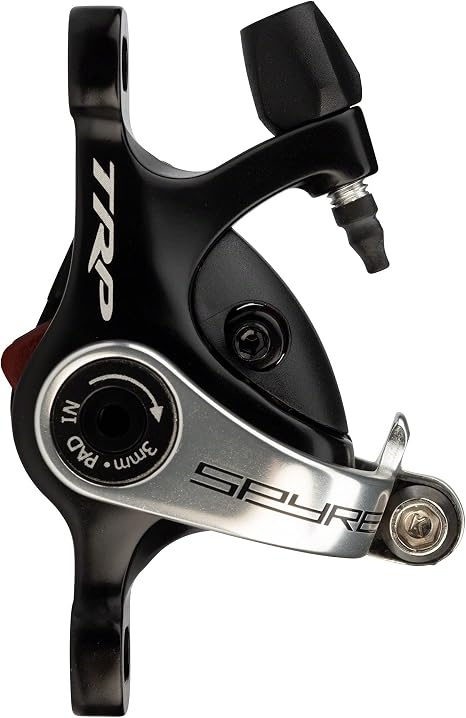
TRP Spyre Mechanical Disc Brake Caliper, Dual-Piston Actuation, Post Mount
Dual piston actuation moves both pads, and cable actuation means no bleeding
Needs periodic cable and pad adjustment, and post mount is not universal without an adapter
Prices and availability were captured from Amazon Creators API and may change.
Because these four do not overlap, read "won" and "lost" as won and lost against the job each one is built for, not against each other.
How I judge mount hardware
Three questions, in this order. What is the load path? What is the adjustment mechanism? What holds the setting once you have set it?
Load path first, because it decides everything downstream. A desk clamp puts the entire load into one jaw on one edge of one board. A pole puts the load into a column and a base. A C-channel track puts the load into bolts that are already anchored through a bed rail. A receiver hitch puts the load into a tube that was engineered to pull a trailer. A post mount caliper puts the load into two threaded bosses on a fork or frame. When a mount fails, it is almost never the arm or the mast. It is the interface.
Adjustment mechanism second. On a monitor arm that means the gas spring or the friction joint. On a bike rack it means the arms that hold the frame or the wheel. On a brake caliper it means the cable and the pad adjuster. The best adjustment mechanism is the one you can operate without hunting for a tool you will lose.
Setting retention third. A mount that needs a hex key to change tilt will never be adjusted again, and a rack that needs a strap re-tensioned every fifty miles gets left in the garage. If adjusting something is annoying, the setting becomes permanent, whether you like it or not.
I keep a torque wrench in my desk drawer for mounts that claim to be finger tight, and a stopwatch for installs that claim to be tool free. My rule for anything I recommend for a client's office is 90 days of daily use at full extension before it earns a permanent spot. I have not lived with all four of these on my own bench, so I am judging them on design, interface, and the problem each one solves, not on invented numbers.
The pole mounted arm: VIVO MOUNT-POLE05O
The VIVO pole mounted arm is rated for 17 to 32 inch screens, which covers everything from a compact secondary panel to a 32 inch main display. That range is the point. One arm that spans 17 to 32 inches is the arm you can move from a spare 24 inch panel to a 32 inch upgrade without buying a second mount.
The reason I like a pole mount is structural. A pole carries the monitor's weight down a column into a base that sits on the desk. Nothing hangs off the back edge. Nothing needs an inch or two of clearance under the desktop. If your desk is a solid slab, a sit stand frame with a thick steel rail underneath, or a particleboard top you would rather not squeeze, a pole is the honest answer.
The trade-offs are the mirror image of the benefit. A pole takes desk surface. You are trading edge real estate for base real estate. Cable management also has to run down the pole rather than along the underside of the desk, which means a channel or a set of clips, or you get exactly the dangling cable look that makes a floating monitor look broken. And the pole height sets a ceiling on how high the screen can go, so measure your seated eye level before you commit.
What I would check before buying: the VESA pattern on the back of your monitor, since 100 x 100 mm is the standard and no VESA holes means no arm at all; the base footprint against your desk depth; and whether the pole and base are part of the kit or sold separately.
Truck bed mounting: INNO RT202
The INNO RT202 is a truck bed bike rack built for C-channel track systems. If your pickup already has a track bolted along the bed rail, this is the cleanest way to carry a bike short of a full tailgate pad, and it is a completely different animal from a strap based bed rack.
Here is why the load path matters. A rack that clamps into a track is anchored to bolts that already pass through the bed rail. Nothing touches the paint. Nothing relies on a hook catching a lip or a strap holding tension for three hours of interstate. The bike stands upright, the bed stays usable, and you can pull the mount out when you need the whole bed for lumber.
The limitation is in the name: C-channel track systems. If your truck does not have a track installed, this rack has nothing to attach to, and adding a track is a separate project with its own drilling decisions. Before you buy, check your track profile and spacing against what the mount expects, and check how the mount secures once it is seated, because a track mount that is easy to install and easy to walk off with is not a win.
Also think about what else lives on your bed rail. A tonneau cover, a bed extender, or a ladder rack can all compete for the same track. Measure before you commit, and remember that a bike mount that fights your cover will get removed and forgotten.
Hitch mounting: Allen Sports Deluxe 4-Bike
The Allen Sports Deluxe 4-Bike hitch rack fits a 2 inch receiver, which is the standard square tube on most trucks, SUVs, and crossovers with a towing package. That single fact is the whole appeal: no drilling, no track, no paint contact, and the rack moves from vehicle to vehicle with a pin.
Four bikes on one mast is a lot of leverage, though, and that is the part most people skip. Every pound on the rack becomes tongue weight on your hitch, and every inch of overhang multiplies the moment arm. Check your vehicle's hitch rating and tongue weight limit before you load four bikes and drive 70 miles per hour. The rack is the easy part. The receiver and the vehicle are the variables.
The other thing to verify is access. A hitch rack lives between you and your tailgate. Some racks tilt away, some fold, some swing, and some simply block the hatch. If you open your trunk or tailgate daily, that design detail matters more than anything else on the spec sheet.
Finally, think about stability. A four bike load on a hitch rack wants to sway, and sway is managed by how the rack tightens into the receiver and how the arms hold the frames. A rack that wobbles in the receiver will wobble more with 120 pounds of bikes on it.
Post mount braking: TRP Spyre
The TRP Spyre is a mechanical disc brake caliper with dual piston actuation and a post mount interface, and it belongs in this article for the same reason the other three do: it is a mount that has to hold a load under movement without drifting.
Dual piston actuation is the interesting spec. A single piston caliper pushes one pad into the rotor and relies on the rotor flexing to reach the other pad. A dual piston caliper moves both pads. That means the rotor stays closer to where it was designed to sit, which makes pad rub easier to dial out and pad wear more even. It is a mechanical caliper, so the actuation is a cable rather than hydraulic fluid, which means you can adjust it with a multi tool on the side of the road and you never have to bleed a line.
The trade-offs are the usual mechanical ones. Cables stretch, pads wear, and the gap between pad and rotor has to be reset periodically, so a mechanical caliper asks for more attention than a sealed hydraulic system. Post mount is the common standard on mountain and gravel frames and forks, but it is not universal, and if your frame or fork uses a different standard you will need the right adapter rather than a bigger hammer.
The reason I mention it here at all: a caliper is a mount with a life safety job. If a monitor arm sags, your neck hurts. If a brake caliper drifts, you find out at the worst possible moment. Buy the version that stays put.
The trade-offs, stated plainly
- The VIVO pole arm trades desk edge for desk surface. It needs a pole and a base where a clamp needs a lip.
- The INNO RT202 trades universal fit for a rock solid fit. It is the best answer if you already have C-channel track and the wrong answer if you do not.
- The Allen Sports 4-Bike trades permanent mounting for portability, and it puts all four bikes on one receiver, so your hitch rating becomes the limiting factor.
- The TRP Spyre trades hydraulic convenience for field serviceability, and it asks for periodic cable and pad attention in exchange.
None of these are flaws. They are the terms of the deal. The mistake is buying the mount that solves a problem you do not have.
Who should buy which
If you are building a desk and your desk edge is thick, beveled, glass, or already occupied by a clamp, the VIVO pole mounted arm is the one to look at first. Measure your monitor's VESA pattern and your desk depth, then decide.
If you own a pickup with a C-channel track and you are tired of straps and paint contact, the INNO RT202 uses hardware you already paid for.
If you need to carry four bikes on a vehicle with a 2 inch receiver and you want the bed left empty, the Allen Sports Deluxe 4-Bike is the straightforward answer, as long as you check the hitch rating and the tailgate access first.
If you are building or servicing a bike with post mount bosses and you want brakes you can adjust without a bleed kit, the TRP Spyre goes on the list.
What I am testing next
Right now my bench has six budget monitor arms under $80, a 27 inch panel, and a 34 inch ultrawide, and they are all on day counts. The question I am trying to answer is whether the cheap gas springs have actually improved or whether they are just better at hiding sag for the first month. The 34 inch ultrawide is the honest test, because it is the load that exposes a weak spring and a loose tilt joint.
The pole mounted format is on that list too. After enough clamp installs, you start to notice that the mount you never have to think about is the one that does not depend on the edge of a desk.
If you want the short version of everything above: match the mount to the interface, not the marketing. The interface is where mounts fail.